Digital Product · UX Research · Dec 2023 to Feb 2024
Bada TV
Every item on the roadmap rested on a guess about who the users were. I ran a survey first, 1,419 responses, and the answers reordered the list.
- Role
- UX Designer
- Market
- Korean immigrants, ages 20 to 60
- Platform
- Desktop · mobile web
- Timeline
- Dec 2023 to Feb 2024
What I was handed
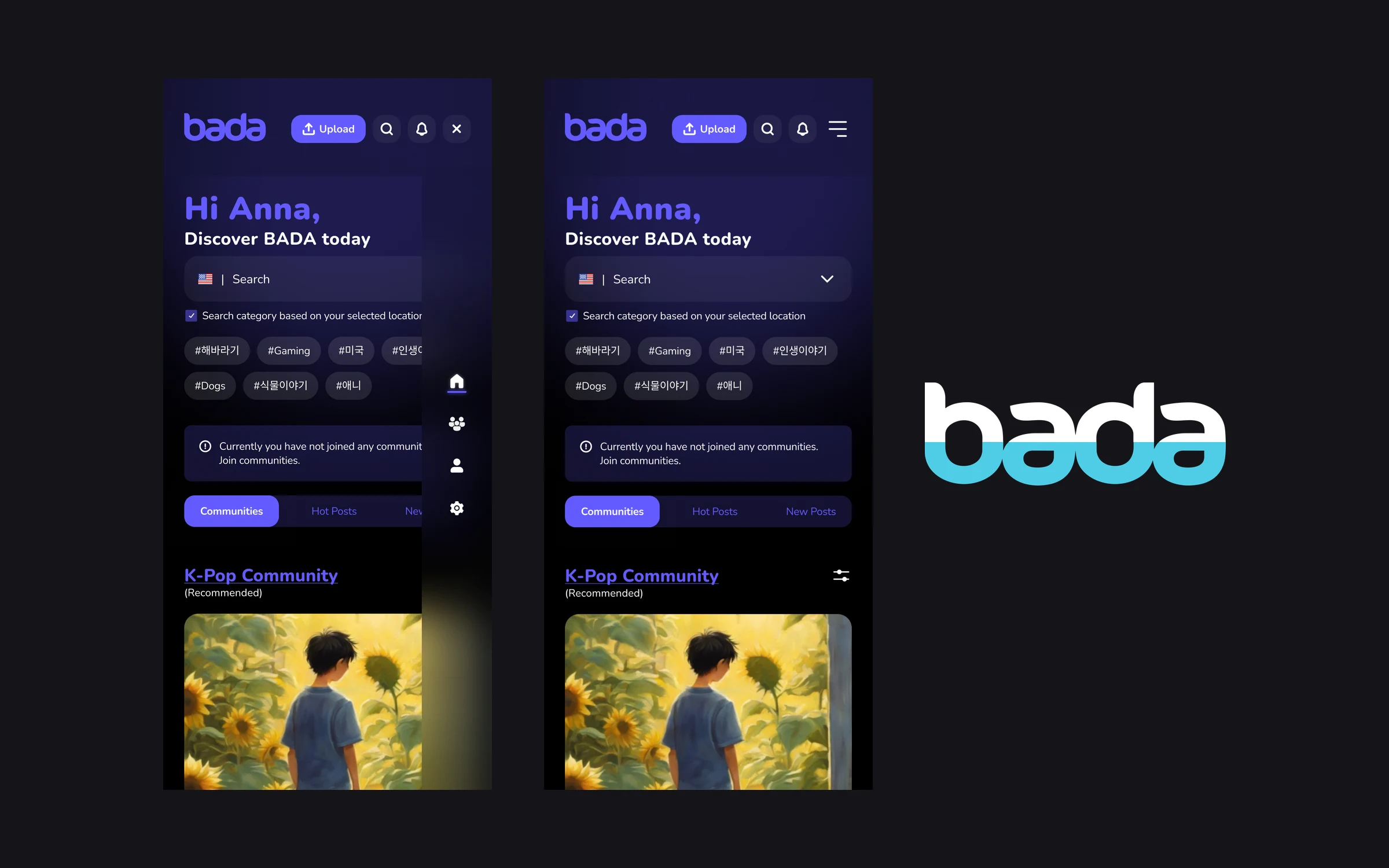
Bada.tv was popular and criticised for the same things every month: recurring technical issues, a complex posting flow, and difficulty saving content. Stakeholders wanted community features added on top, to bring new people in.
Nobody could tell me why the people already there came. Google Analytics was installed and returned basic traffic only: no demographics, no occupations, no age groups, no motivation.
Every roadmap decision rested on an assumption about a person nobody had spoken to.
So I didn't start with screens
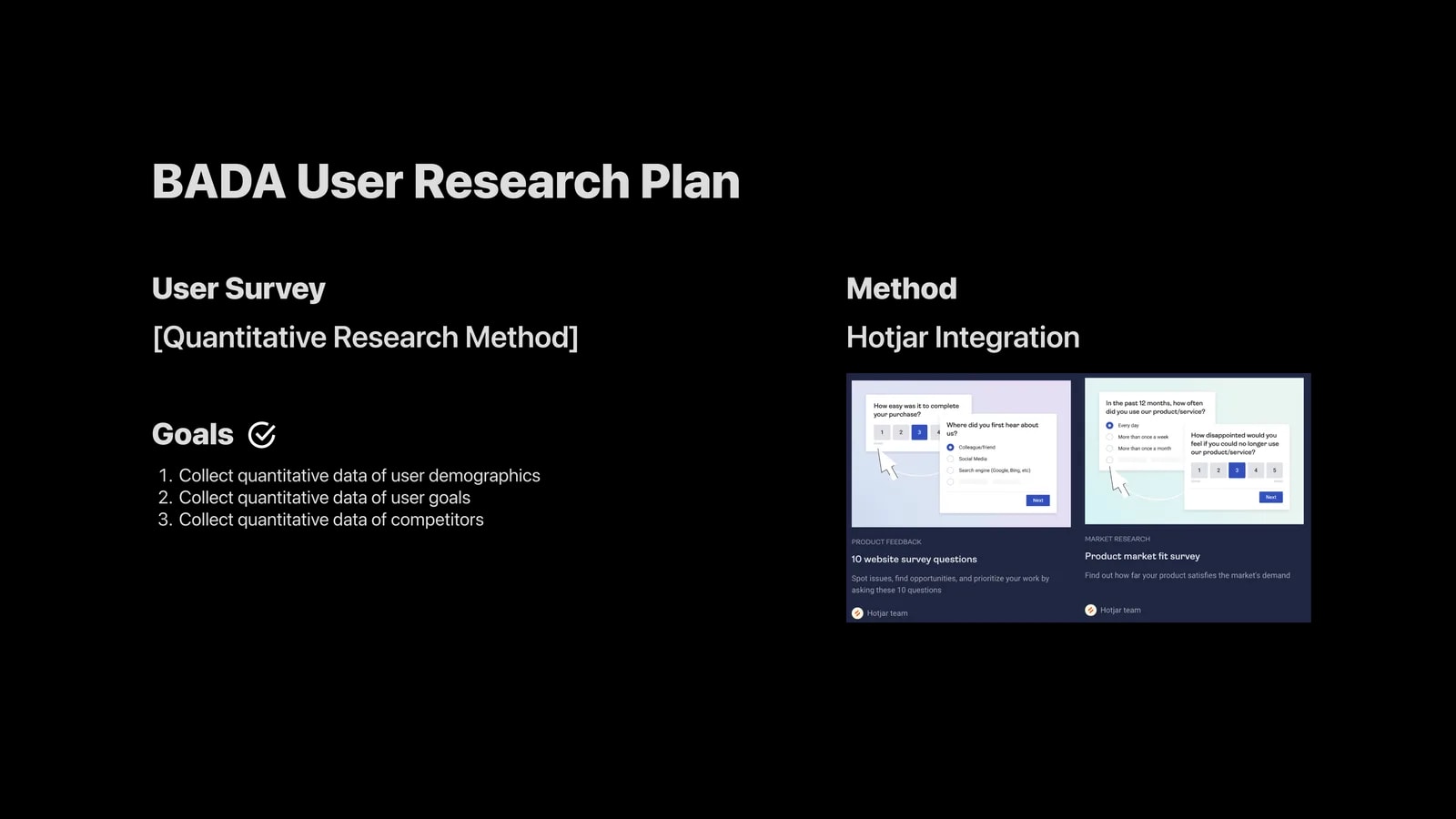
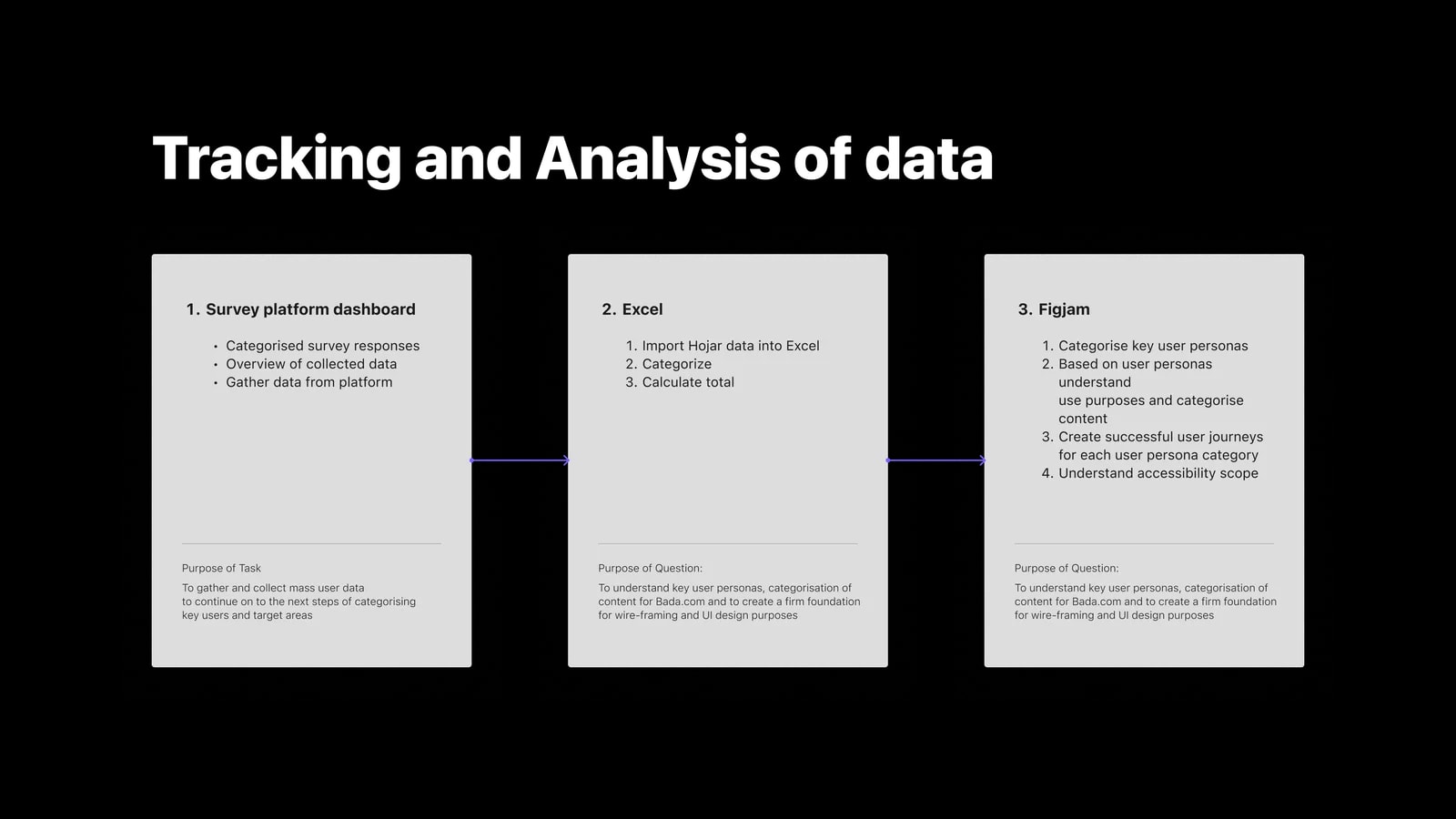
I wrote a research plan first, around a single question: how do we understand the current experience well enough to improve it for the people already here, while still attracting new ones.
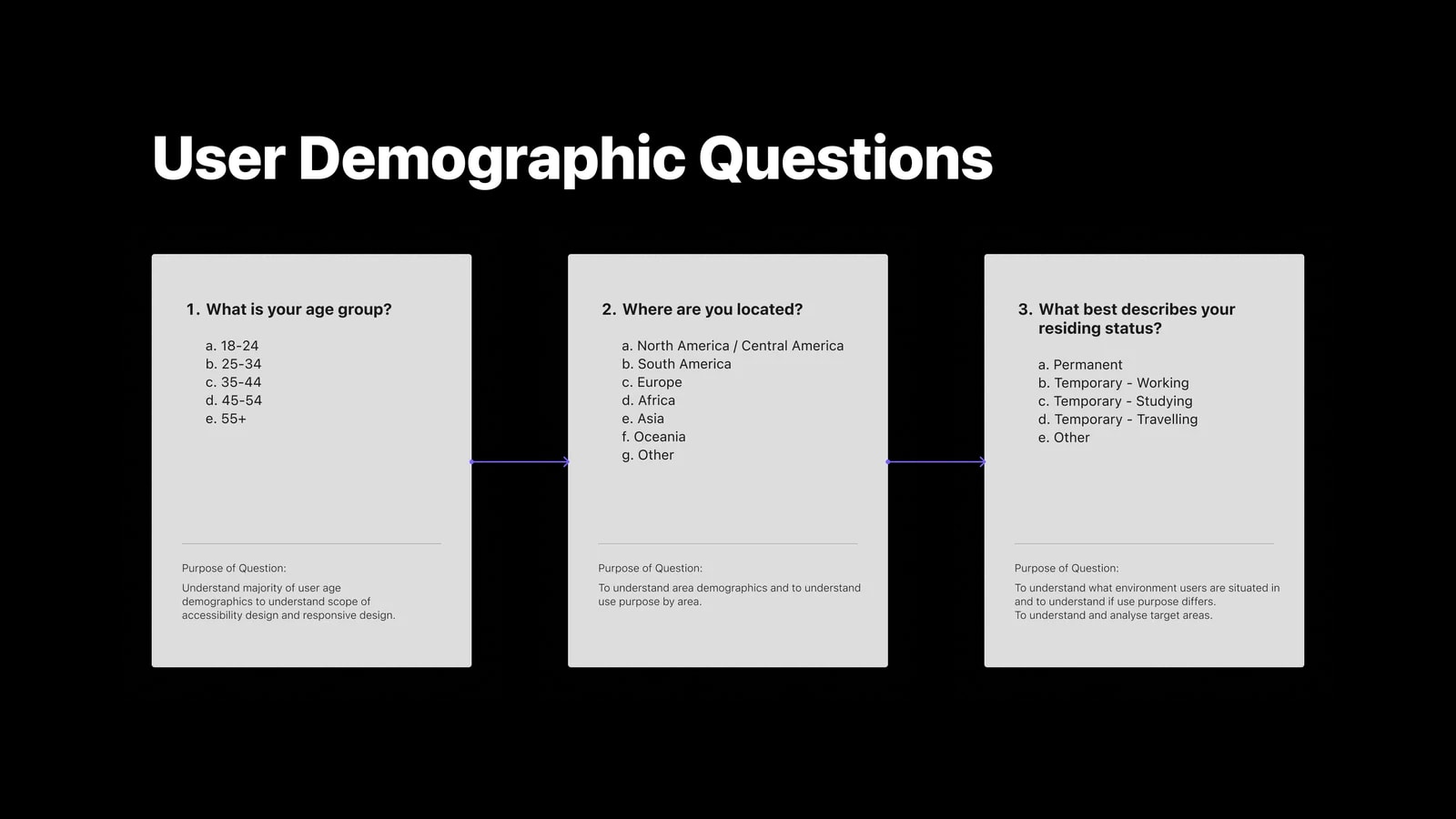
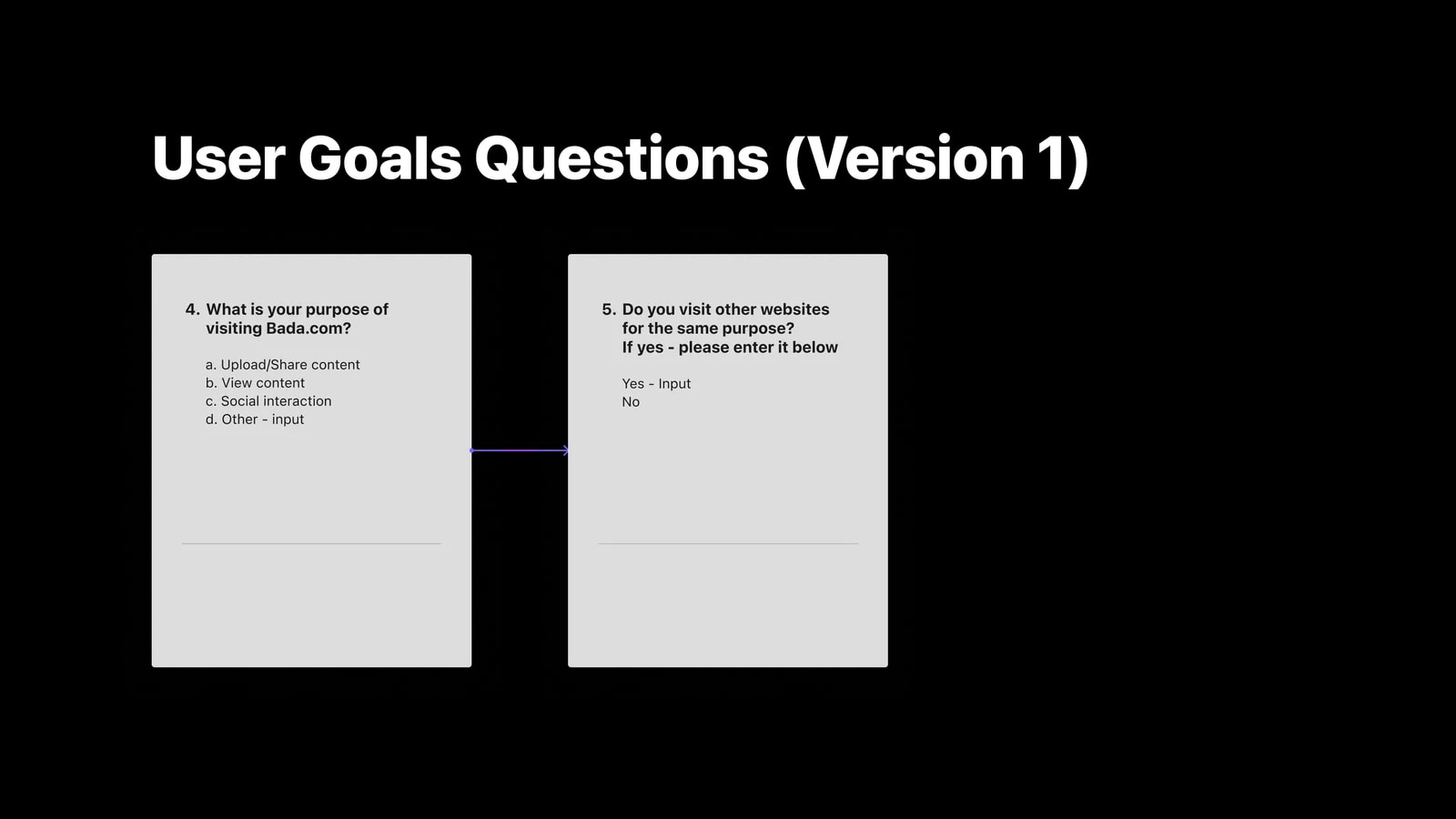
I drafted the demographic questions and the goal questions separately, and the goal questions went through two versions before the survey went out.
What came back
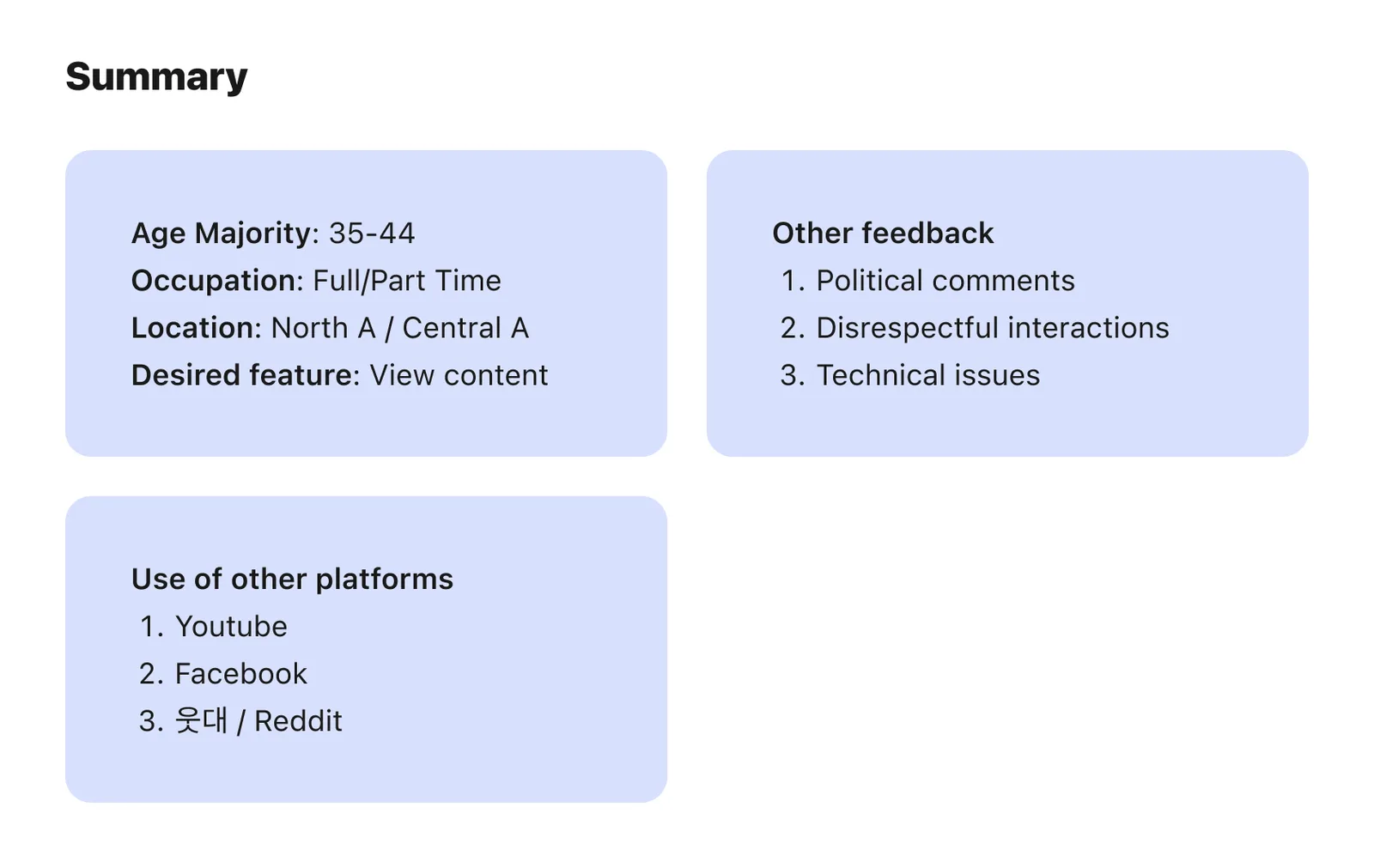
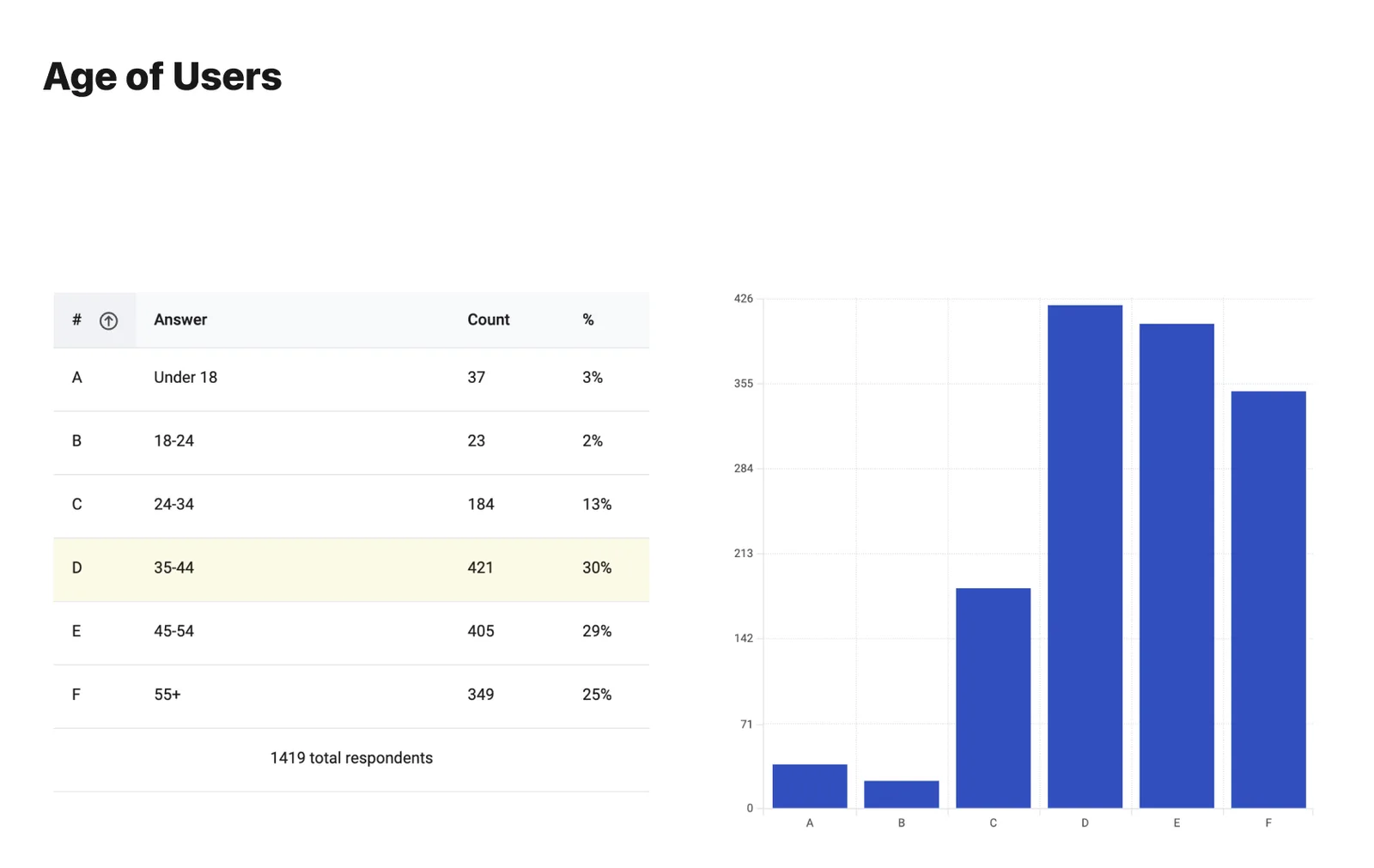
A ten day Hotjar survey returned 1,419 responses. The audience was older than anyone had assumed: 84% were 35 or over and only 18% were under 35, most in North and Central America, most in full or part time work.
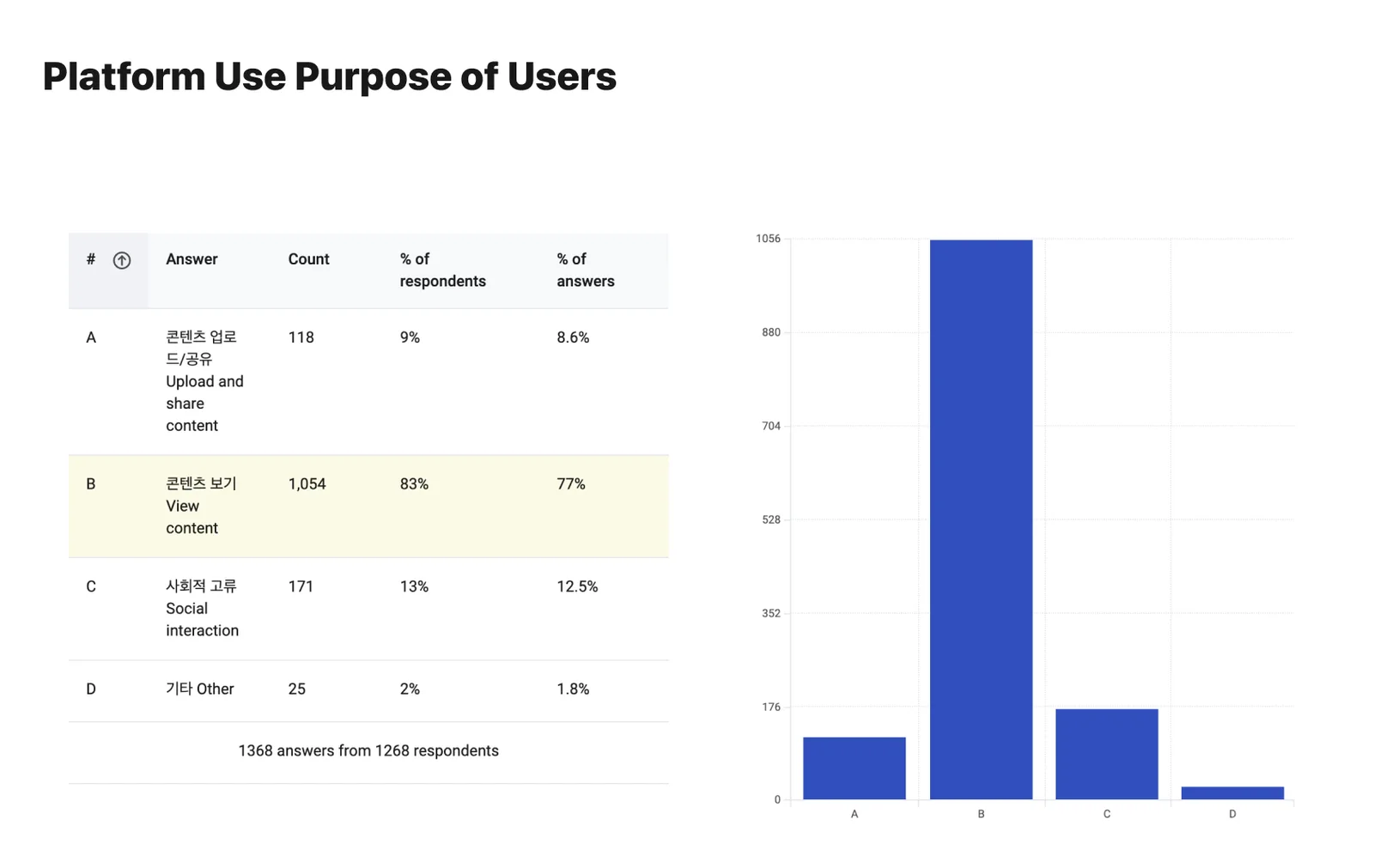
The number that decided things was why they came. Of 1,268 respondents, 83% came to view content and 9% came to upload and share it.
The posting flow was at the top of the stakeholder list. Nine per cent of users post.
Two things nobody had raised
Political comments and disrespectful interactions came back as real pain points, sitting alongside the technical issues we already knew about.
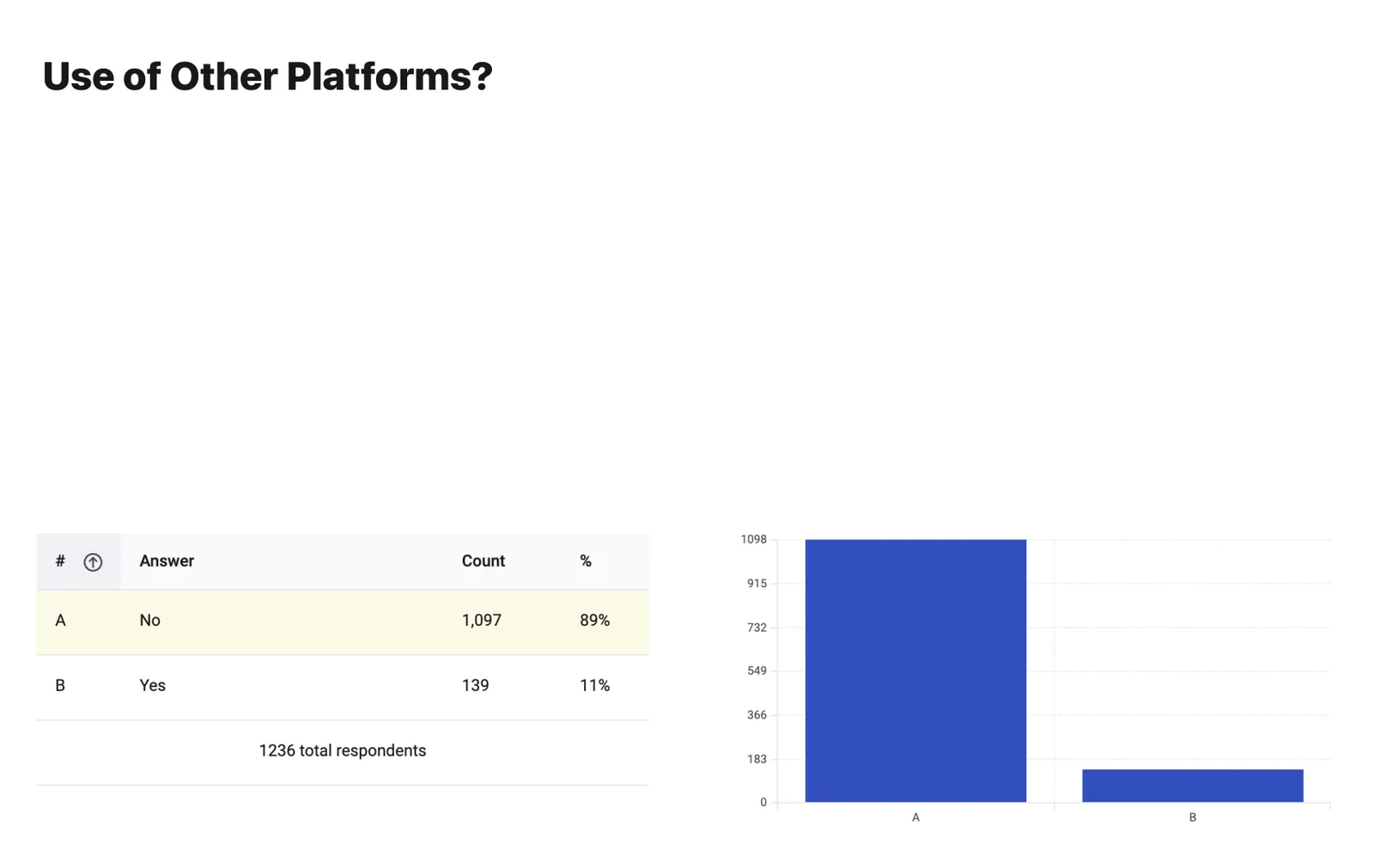
And the comparison people were making was not to other Korean platforms. It was to YouTube, Facebook and Reddit, which is a different bar for search, saving and moderation than anyone had been designing against.
What I put in the MVP, and what I moved
- 01
Fix the technical issues
Kept at the top. This was the one stakeholder priority the research confirmed rather than contradicted.
- 02
Improve content viewing, not posting
The posting flow came down the list. Navigation and saving went up, because that is what 83% of the audience actually does.
- 03
Moderation before community features
Stakeholders wanted community features to attract new users. The research turned that into protecting the users already there, starting with moderation for political and disrespectful comments.
How the roadmap turned
What happened next
Stakeholders were open to the findings rather than defensive about them, which is the part that made the research worth running. I was able to push the feature and UI recommendations that came out of it, and the roadmap changed.
It stopped at design. The build was not funded, for cost reasons, so what exists is a research backed direction rather than a shipped product. The research changed the decision. The decision did not survive the budget.